Information on Japan’s 100 famous hot springs
What is the “spring quality” of Japanese hot springs?
北海道 Hokkaido

層雲峡温泉 Sounkyo Onsen → Contact: https://sounkyo.net/
Spring quality:Bicarbonate springs、Sulfur springs
Atopic dermatitis, psoriasis vulgaris, chronic eczema, epidermolysis (hydrogen sulfide-type sulfur springs may also cause peripheral circulatory disorders)
★movie https://youtu.be/32EkEI8lLTM?si=cSK7MiUZByiLdr22
Sounkyo Onsen, located within Daisetsuzan National Park in Kamikawa Town, Hokkaido, is a hot spring resort surrounded by sheer cliffs and boasting a magnificent landscape.
♨️ Hot Springs and Accommodations
The hot spring town features a European-style streetscape modeled after a Canadian mountain resort, and each accommodation offers different spring water qualities.
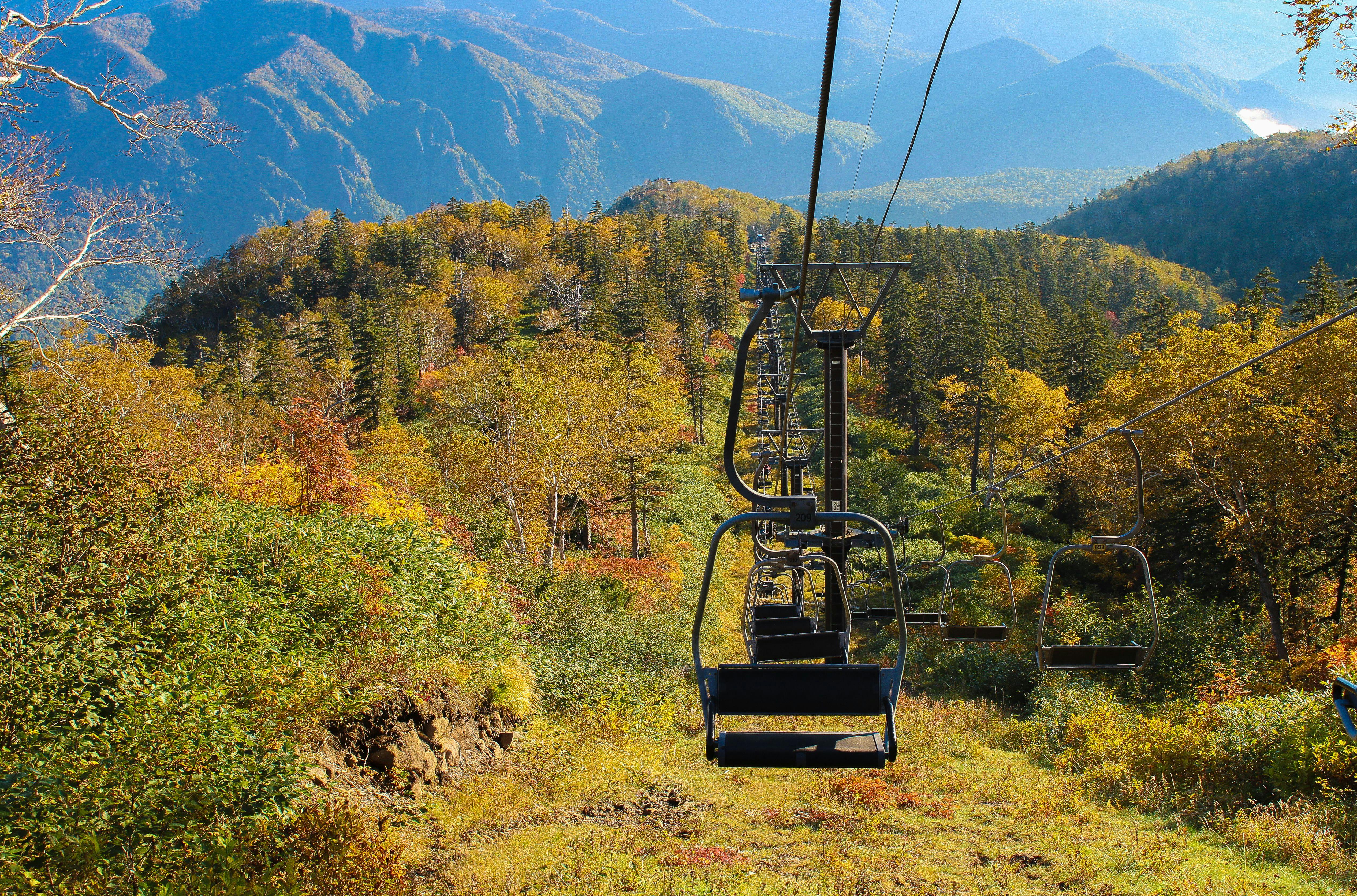
十勝岳温泉 Tokachidake Onsen→ Contact: https://www.kamifurano.jp/rest/spa/
Spring quality:Tokachidake Onsen is known as the highest hidden hot spring in Hokkaido (1,280m above sea level), and is home to mainly acidic iron sulfate springs and calcium-magnesium sulfate springs. Many of the springs are cloudy brown in color due to their high iron content, and are popular as “beautiful skin water” with excellent moisturizing and antibacterial properties (for cuts and skin diseases).
★movie https://www.youtube.com/watch?v=DLT6e0i_XjM
Tokachidake Onsen is a hot spring resort located midway up Mount Tokachi in Kamifurano Town, Hokkaido, at the highest elevation in Hokkaido (approximately 1,280m).
The hot springs, created by the geothermal heat of the Nukkakushi Crater, offer a unique bathing experience, offering stunning views of the towering Tokachi Mountain Range and the Furano Basin below.
●https://www.visit-hokkaido.jp/spa/spot/detail_10608.html
丸駒温泉 Marukoma Onsen→ Contact: https://www.marukoma.co.jp/english/
Spring quality:Marukoma Onsen is a rare natural hot spring that springs from the feet and can be enjoyed at the Marukoma Onsen Ryokan on the shores of Lake Shikotsu in Hokkaido. The spring water is a sodium-calcium chloride-bicarbonate-sulfate spring, and is characterized by its neutral pH, gentle on the skin, and excellent heat retention.
★movie https://youtu.be/6G5uatYWIrQ?si=ui0dNAnTsYk9pqSY
Located on the shores of Lake Shikotsu in Chitose City, Hokkaido, Marukoma Onsen Ryokan is a historic inn founded in 1915 (Taisho 4) and a member of the Japan Society for Preserving Secret Hot Springs. It is known for its natural open-air bath, which is connected to Lake Shikotsu and is rare in Japan, and you can enjoy the mystical experience of the bath’s depth changing according to the lake’s water level.
●https://www.visit-hokkaido.jp/spa/spot/detail_10608.html
平磯温泉 Hiraiso Onsen→ Contact: https://www.ginrinsou.com/
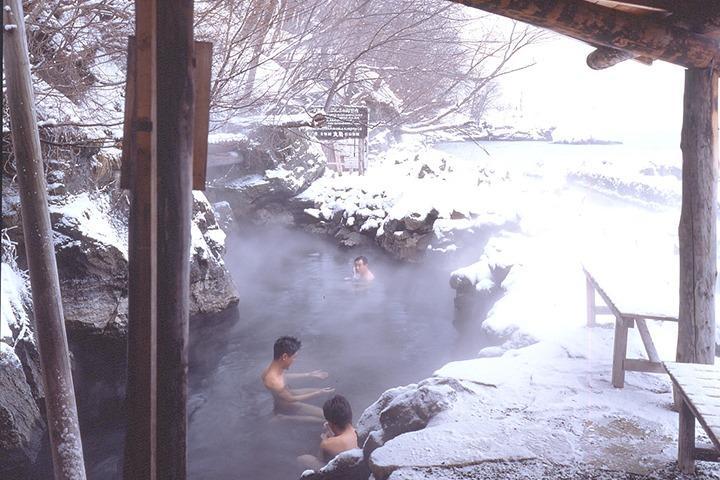
Spring quality:Hiraiso Onsen, located at Ginrinso Ryokan in Otaru, Hokkaido, is a sodium sulfate spring with its own source that springs from 1,300 meters underground. The clear, colorless water feels soft on the skin, and is known for its effectiveness in easing sensitivity to cold and relieving fatigue, as well as keeping you warm after a bath.
★movie https://youtu.be/rASTuKFoVZw?si=MzlURxFLp_DmlIhU
The main spot known as “Hiraiso Onsen” is a historic hot spring resort located in Otaru, Hokkaido. While “Hiraiso” is also a place name in Hitachinaka, Ibaraki Prefecture, the one that is most widely known as a hot spring resort is the one in Otaru.
●https://map.yahoo.co.jp/v3/place/APz3CCJ8wwc

定山渓温泉 Jozankei Onsen→ Contact: https://jozankei.jp/
Spring quality: Onsen is a “sodium chloride spring” characterized by its colorless, transparent, and mildly salty taste. The salt coats the skin and prevents sweat from evaporating, providing excellent heat retention and moisturizing effects, making it an effective “hot spring” for those prone to cold, as well as chronic fatigue and pain. High-quality hot water at temperatures between 60 and 80 degrees flows from over 50 hot springs.
★movie https://youtu.be/jl0ZxsJvYJs?si=pQmFj88HL8VxfIUc
Jozankei Onsen, known as “Sapporo’s inner sanctum,” is one of Hokkaido’s leading hot spring resorts, with a history of over 150 years since its opening. It is easily accessible, about an hour by car or bus from central Sapporo, and its greatest appeal is being able to enjoy the rich natural beauty of the valley and high-quality hot springs.
●定山渓観光協会 https://www.youtube.com/@jozankei-official

登別温泉 Noboribetsu Onsen→ Contact: https://travel.rakuten.co.jp/onsen/hokkaido/OK00020.html
Spring quality:Noboribetsu Onsen is known as the “hot spring department store” and is one of the most famous hot springs in Japan, with nine different types of spring water gushing out in one place: sulfur springs, salt springs, iron springs, acidic iron springs, amber springs, Glauber’s salt springs, baking soda springs, radium springs, and alum springs. It is characterized by its abundant water drawn from Jigokudani and its diverse effects (for chronic skin diseases, neuralgia, sensitivity to cold, skin beauty, etc.), and you can enjoy different spring water types and bath tours at each hotel or inn.
★movie https://youtu.be/XTbJ8k9ZXl0?si=YcX–gmqyhYvSD_s
Noboribetsu Onsen is one of Hokkaido’s most famous hot springs, a “hot spring department store” with nine different types of spring water. With breathtaking views such as Jigokudani and accommodation facilities boasting abundant hot spring water, it is popular with both domestic and international visitors. Access is approximately one hour from New Chitose Airport or a 15-minute bus ride from JR Noboribetsu Station.

ニセコ温泉郷 Niseko Hot Springs → Contact: https://www.niseko-ta.jp/hot-spring/
Spring quality:Niseko Onsenkyo is an area known as the “hot spring department store,” with seven of the 10 types of spring water found here. The main types of spring water are sodium chloride bicarbonate springs (skin-beautifying springs) that have excellent moisturizing and heat-retaining properties, and sulfur springs that have strong antibacterial and detoxifying properties, and many facilities offer spring water directly from the source.
★movie https://youtu.be/GJco55HuaiM?si=ajMtlMh9c4eXAnR6
Niseko Onsenkyo is the collective name for the hot springs scattered around Niseko Annupuri in Hokkaido. Designated as a “National Hot Springs Recreation Area” by the Ministry of the Environment, it is a world-class ski resort, but its greatest feature is that you can enjoy a wide variety of spring qualities that differ from source to source.
● https://hokkaido-labo.com/area/otaru/niseko-hot-spring
銀婚湯 Ginkonyu→ Contact: https://www.hitou.or.jp/provider/detail?providerId=642
Spring quality:Ginkonyu, located in Yakumo Town, Hokkaido, is a free-flowing sodium chloride bicarbonate spring with a greenish color that is gentle on the skin. At a high temperature of 90°C, it is a chloride spring that is effective for treating cuts, sensitivity to cold, dry skin, and fatigue.
★movie https://youtu.be/U_FVug7JziE?si=ko4GGEHpGr5JS3vg
Ginkonyu, located in Yakumo Town, Hokkaido, is a historic hot spring inn founded in 1925 and is a member of the Japan Society for the Preservation of Secret Hot Springs. It is known for its “hidden hot springs” scattered across its vast grounds and its abundant supply of hot spring water, and as it was named after a couple’s silver wedding anniversary, it is also a popular place to stay for celebrations.
湯の川温泉 Yunokawa Onsen→ Contact: https://hakodate-yunokawa.jp/
Spring quality:Hakodate’s Yunokawa Onsen is primarily a sodium-calcium chloride spring (salt spring), and is characterized by its colorless, transparent, odorless, and smooth texture. Its excellent heat-retaining properties make it also known as “hot water,” and it’s effective for treating sensitivity to cold, fatigue, and neuralgia. The source water is around 65 degrees Celsius, and many facilities offer free-flowing spring water.
★movie https://youtu.be/OXYWLVPa_rs?si=_1BdRKDehXoM3v1S
Yunokawaonsen (Hokkaidō Hakodate-shi) wa, 1653-nen Hiraki yu to sa reru rekishi aru onsen-chi de, hōfuna yuryō to mushoku tōmei no natoriumu karushiumu – enkabutsusen ga tokuchōdesu. Hakodate kūkō kara kuruma de yaku 5-bu, Hakodate-eki kara mo akusesu ryōkōde, Tsugarukaikyō o nozomu rizōtohoteru ya shinise ryokan ga tasū tachinarabi, shinsen’na umi no kō ya onsen o tanoshimeru ninki no kankō-chidesu.
Yunokawa Onsen (Hakodate, Hokkaido) is a historic hot spring resort believed to have opened in 1653, known for its abundant hot spring water and colorless, clear sodium-calcium chloride springs. Located about a five-minute drive from Hakodate Airport and easily accessible from Hakodate Station, it is a popular tourist destination lined with resort hotels and long-established inns overlooking the Tsugaru Strait, where you can enjoy fresh seafood and hot springs.
● https://www.jalan.net/onsen/OSN_50010/
東北 Tohoku
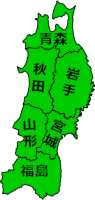
青森県 Aomori Prefecture 青荷温泉 Aoni Onsen Contact: https://aoninet.com/
Spring quality:Located deep in the mountains of Kuroishi City, Aomori Prefecture, Lamp no Yado Aoni Onsen is a secluded hot spring that uses no electricity and is lit by approximately 200 lamps. The spring water is simple hot spring water (hypotonic, weakly alkaline). The water is colorless and transparent, and is gentle to the touch, and is said to be effective in relieving fatigue, sensitivity to cold, and neuralgia. Guests can enjoy the water in four baths, including an open-air bath.
★movie https://youtu.be/Qx13EGXZ6cg?si=GYZ2xhmh8JEMGNRQ
Aoni Onsen is a hidden hot spring known as the “Lamp Inn” and is located deep in a mountain valley in Kuroishi City, Aomori Prefecture.
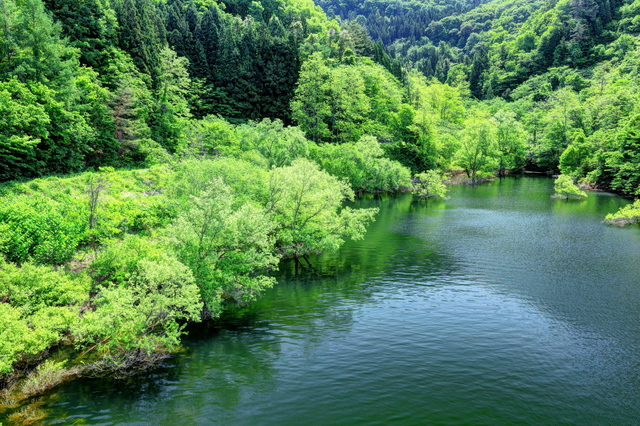
青森県 Aomori Prefecture 嶽温泉 Dake Onsen Contact: https://www.trip-tsugaru.com/tour/371/
Spring quality:Dake Onsen, located at the foot of Mt. Iwaki in Hirosaki City, Aomori Prefecture, is characterized by its milky white water, which is mainly an earth chloride-containing acidic hydrogen sulfide spring. The acidic spring has strong antibacterial properties and is known to be effective for chronic skin diseases, neuralgia, rheumatism, lower back pain, hemorrhoids, and more, and is known as a “famous hot spring” that is particularly effective on the skin.
★movie https://youtu.be/Wid3lNwdKjI?si=iEsdxRY8bTXbW85P
Dake Onsen is a historic hot spring resort located in the west of Hirosaki City, Aomori Prefecture, at the southwestern foot of Mount Iwaki, a sacred mountain in Tsugaru. Known as a therapeutic hot spring resort since the Edo period, it is characterized by its milky white, rich sulfur spring water.
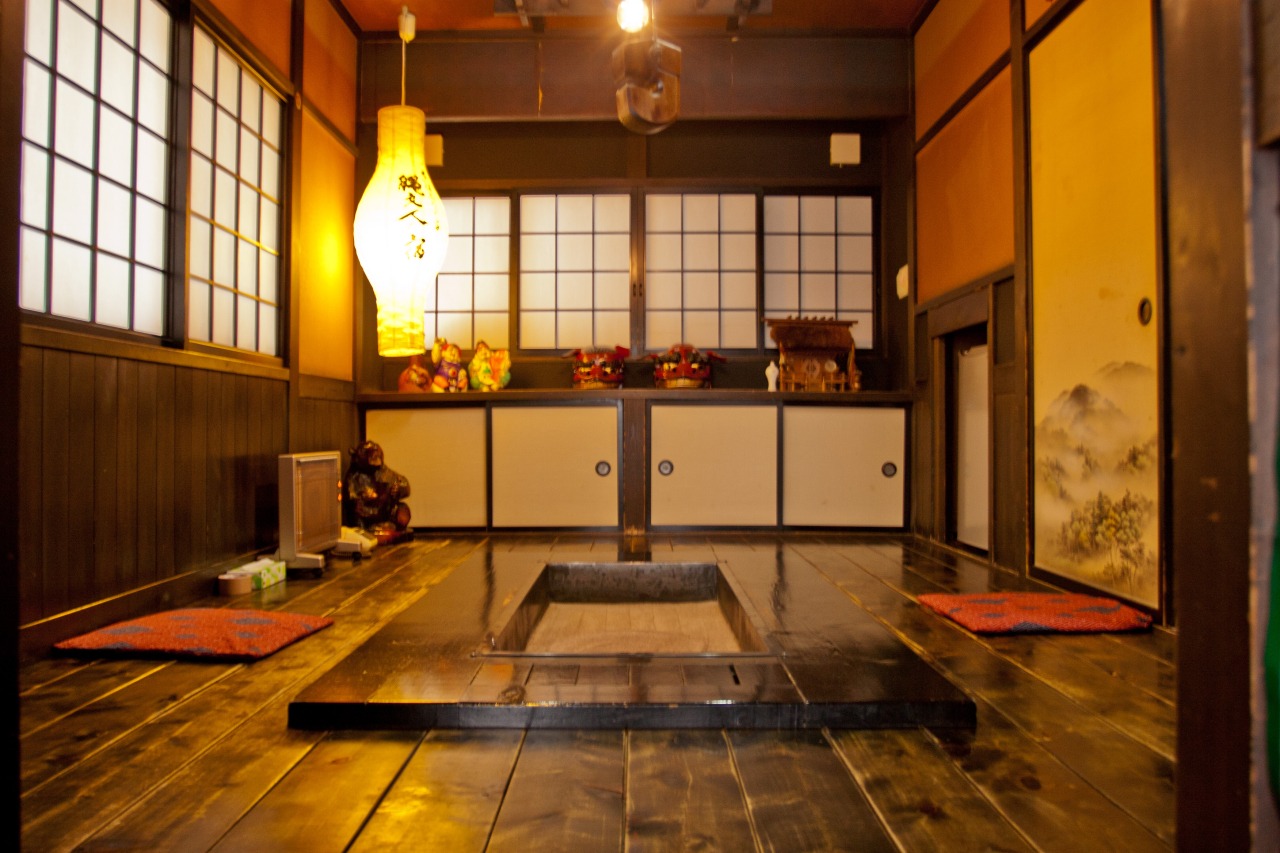
秋田県 Akita Prefecture 日景温泉 Hikage Onsen Contact:https://travel.rakuten.co.jp/HOTEL/168410/168410.html
Spring quality:Hikage Onsen in Odate City, Akita Prefecture, is a milky, rich sulfur spring, with the main spring quality being “sulfur-containing, carbon dioxide-sodium-chloride hot spring.” It has a neutral pH of 6.3-6.5, and is characterized by the scent of hydrogen sulfide and a strong salt content. It is a famous hot spring with a direct flow from the source, known as the “sacred spring that goes around every three days,” which is said to be particularly effective against skin diseases.
★movie https://youtu.be/JsTMNDH3ftc?si=IOzBS2UNSZuof9Tx
Akitaken’ōdateshi no Yatatetōge ni ichi suru Shirakami yatate tōgenkyō no yado Hikage onsen wa, 1893-nen (Meiji 26-nen) sōgyō no rekishi aru ikken’yadodesu. Hakudaku shita nōkōna iōsen wa `mikka ichi mawari no reisen’ ya `Tōhoku no Kusatsu’-tomo shōsa re, takai bihada kōka ya ryōyō kōka de shira rete imasu.
Located at Yatate Pass in Odate City, Akita Prefecture, Shirakami Yatate Yugenkyo no Yado Hikage Onsen is a historic inn founded in 1893 (Meiji 26). The milky, rich sulfur spring is also known as the “sacred spring that goes around every three days” and the “Kusazu of Tohoku,” and is known for its excellent skin-beautifying and therapeutic effects.
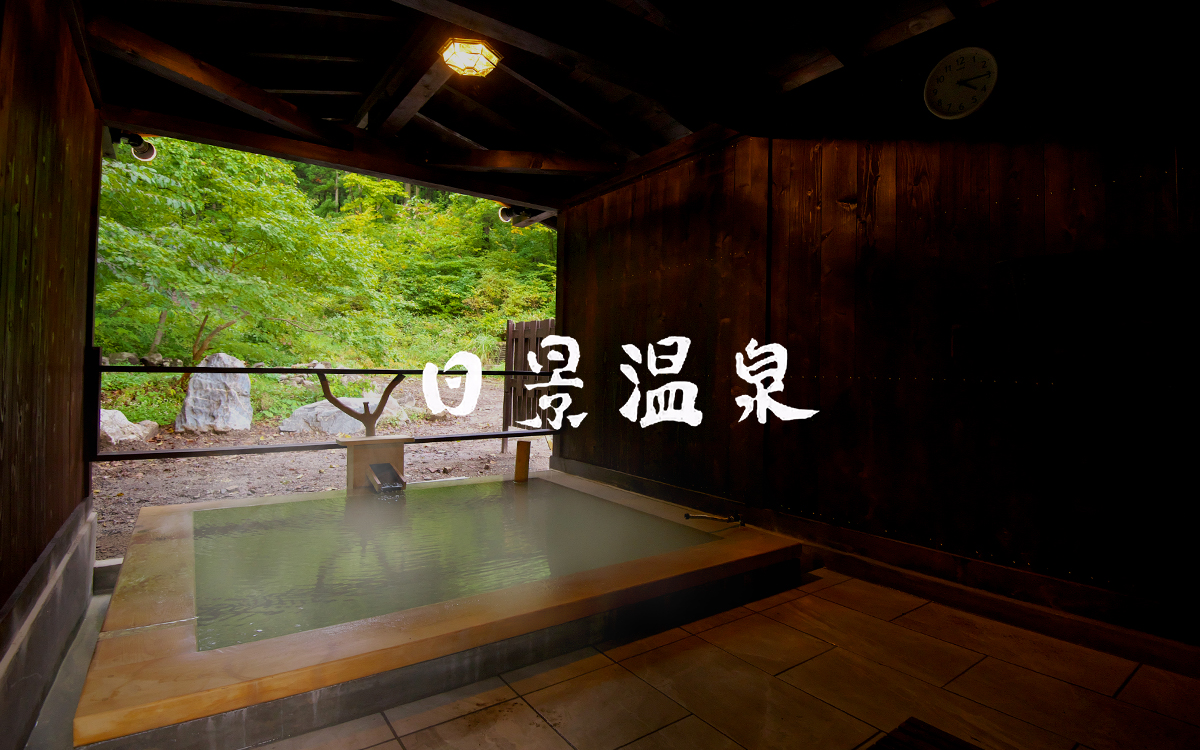
秋田県 Akita Prefecture 乳頭温泉郷 Nyuutou Onsengou Contact: http://www.nyuto-onsenkyo.com/
Spring quality:Nyuto Onsenkyo in Akita Prefecture is one of Japan’s leading hot spring resorts, boasting over 10 different spring sources. These include simple sulfur springs, sodium bicarbonate springs, and chloride springs, and are famous for their milky white waters. Each of the seven hot spring inns has its own source, allowing visitors to enjoy a variety of spring qualities.
★movie https://youtube.com/shorts/0GFmz3RC8uM?si=-E6ItcXs10eN7BeG
Nyuto Onsenkyo is one of Japan’s most secluded hot spring resorts, consisting of seven hot spring inns, located within Towada-Hachimantai National Park in Senboku City, Akita Prefecture. In the 2026 “Jalan Popular Hot Spring Resort Rankings,” it was ranked first in the secluded hot springs category.
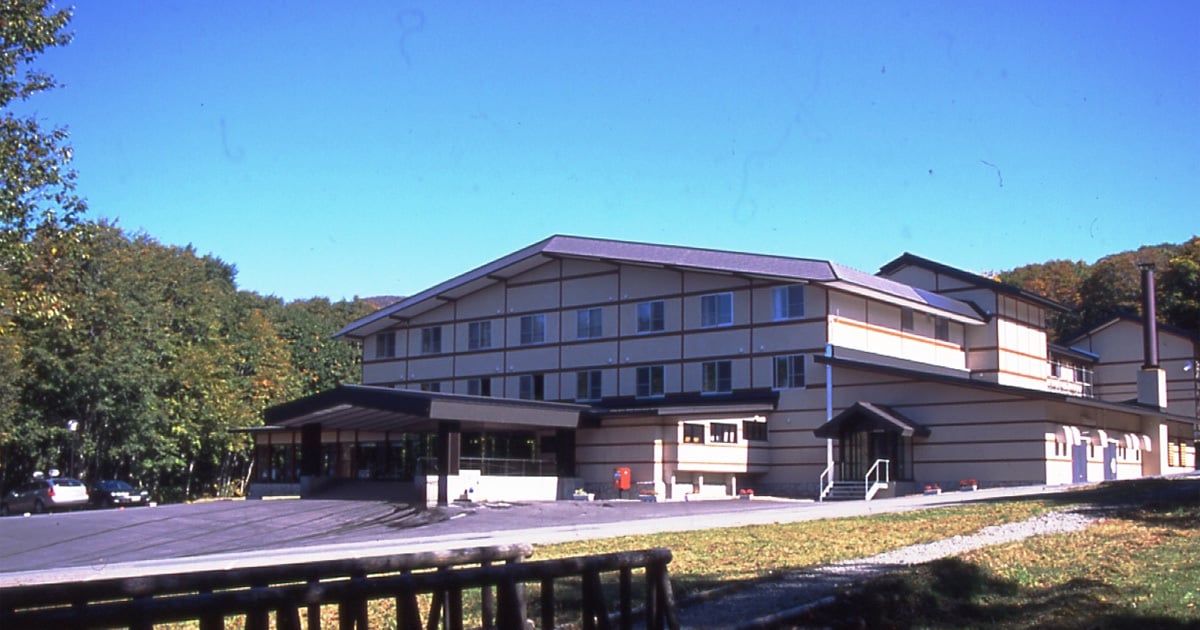
岩手県 Iwate Prefecture 台温泉 Dai Onsen Contact: https://www.yukoyuko.net/onsen/0279
Spring quality:Dai Onsen in Hanamaki City, Iwate Prefecture, is a hot spring resort with a history of 1,200 years, where the hot springs are mainly sulfur-containing sodium sulfate and sulfide springs and simple sulfur springs. Known as a “beauty spring” with a weak alkaline content that makes the skin smooth, you can enjoy the high temperature hot spring water, sulfur scent, and hot spring mineral deposits.
★movie https://youtu.be/_S8cLNZ3mwQ?si=S1bjryizdbPOhAy5
Iwate ken Hanamaki onsenkyō no `dai onsen’ wa, yaku 1200-nen mae no Hiraki yu to sa reru rekishi aru meitōdesu. Hanamakionsen machi no oku ni ichi shi, kyōkoku ni sotte retorona mokuzō ryokan ya kyōdō yokujō ga tenzai suru, fuzei aru onsen machi. Enka-mono ryūsan shio iōsen no `bihada no yu’ ga tokuchō de, otonanokakurega-tekina tōryū no ji to shite ninkidesu.
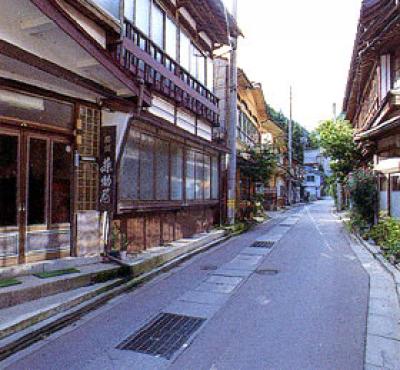
Dai Onsen in Hanamaki Onsenkyo, Iwate Prefecture, is a famous hot spring with a long history, said to have first been discovered around 1,200 years ago. Located deep within Hanamaki Onsen town, this charming hot spring town is dotted with retro wooden inns and public baths along the gorge. Known for its “beautifying skin water” made from chloride, sulfate, and sulfur spring water, it is a popular hideaway spot for adults.
岩手県 Iwate Prefecture 鉛温泉 Namari Onsen Contact:https://namari-onsen-ryokan.com/
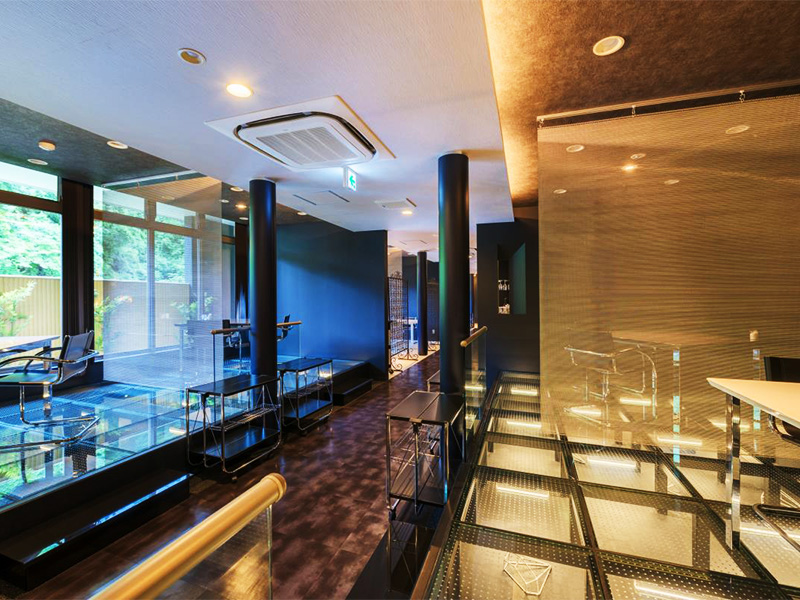
Spring quality:Hanamaki City, Iwate Prefecture’s Namari Onsen (mainly Fujizo Ryokan) has four private hot springs and is a hypotonic, weakly alkaline, high temperature hot spring (simple hot spring) with a pH of around 8.1 to 8.3. The hot springs, which have been around for about 600 years, are 100% free-flowing without adding water, heating, or circulation, and the famous “Shirozaru no Yu” (White Monkey Bath) is particularly popular, as you can enjoy the fresh hot water that gushes out from the natural rocks at the bottom.
★movie https://www.youtube.com/watch?v=-Ll1K1Ih-Ug
Located in Hanamaki City, Iwate Prefecture, Namari Onsen boasts a history of approximately 600 years and is an atmospheric hot spring resort beloved by literary figures such as Miyazawa Kenji and Tamiya Torahiko. In particular, the Fujizo Ryokan, a single inn, is known for its nostalgic wooden architecture and its deepest artesian rock bath, said to be the deepest in Japan.
岩手県 Iwate Prefecture 国見温泉 Kunumi Onsen Contact:https://www.spa.or.jp/search_p/detail_p/?F_ID=30090&pg=0
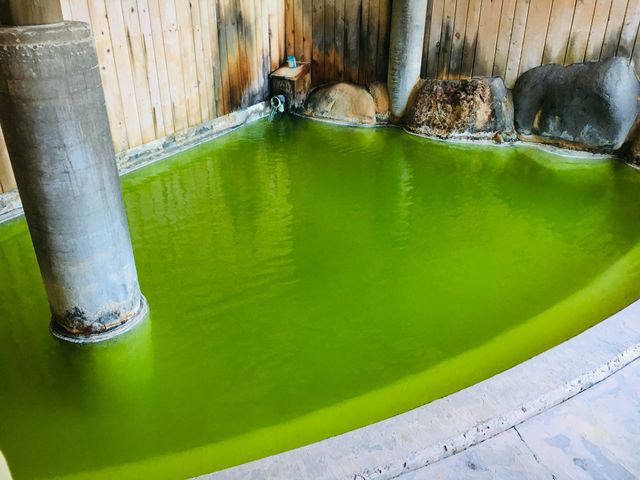
Spring quality:Kunimi Onsen in Shizukuishi Town, Iwate Prefecture, is a sulfur-containing sodium bicarbonate spring (neutral, high temperature hot spring) characterized by its emerald green color, which is rare nationwide. The water, with a pH of around 6.8 and a sulfur scent that is gentle on the skin, is a hidden hot spring that flows directly from the source and is expected to be highly effective for chronic skin diseases, gastrointestinal disorders, neuralgia, and gynecological disorders.
★movie https://youtu.be/0OxqXVxq3k4?si=0IdW0Z2QqV0y49C6
Kunimi Onsen is a hot spring resort located at the foot of Mount Akita Komagatake (approximately 850m above sea level) in Shizukuishi Town, Iwate Prefecture, and is known for its vivid emerald green water, which is rare even nationwide.
岩手県 Iwate Prefecture 湯田温泉峡 Yuda Onsen Gorge
Contact:https://yamanoideyu.com/pamphlet/images/yamanoideyu.pdf
Spring quality:Yuda Onsenkyo (Nishiwaga Town) in Iwate Prefecture is the general name for several hot springs (Yukawa, Iwate Yumoto, Sugo, etc.) characterized by spring waters that are expected to have moisturizing and skin-beautifying effects, mainly sulfate springs, simple hot springs, and chloride springs. Yukawa Onsen in particular is a sodium sulfate chloride spring, and is a famous hot spring that has long been popular as a therapeutic hot spring.
★movie https://youtu.be/46WIeR_HN-4?si=lVLNo2446hwpzsyN
`Yudaonsen kai (yuda on sen kyō)’ wa, Iwate ken wagagun’nishiwagamachi ni aru, Wagagawa-zoi ni tenzai suru onsen-chi no sōshōdesu. Yamaguchi ken no yūmeina `Yudaonsen’ to shibashiba kondō sa remasuga, kochira wa yutakana shizen ni kakomareta shizukana tōji-ba no fun’iki ga tokuchōdesu.
Yuda Onsenkyo is the general term for hot springs scattered along the Waga River in Nishiwaga Town, Waga District, Iwate Prefecture. It is often confused with the famous Yuda Onsen in Yamaguchi Prefecture, but this hot spring is characterized by its tranquil spa atmosphere surrounded by lush nature.
山形県 YamagataPrefecture 肘折温泉 Higiori Onsen
Contact:https://hijiori.jp/
Yuda Onsenkyo (Nishiwaga Town) in Iwate Prefecture is home to many hot springs, primarily sodium sulfate and chloride springs, known for their mild alkaline properties that moisturize and keep you warm. It’s made up of several hot springs, including Yukawa Onsen, Yumoto Onsen, and Sugo Onsen, and is a diverse hot spring area that includes oily-smelling simple sulfur springs known for their skin-beautifying properties, as well as bitter sodium sulfate springs.
★movie https://youtube.com/shorts/-HjKm0UzAgI?si=yH2EKQeLvDYvLbtw
Yunosato Hijiori Onsen | Yunosato Hijiori Onsen | Yunosato Hijiori Onsen Hijiori Onsen, located in Okura Village, Yamagata Prefecture, is a hot spring resort with a history of approximately 1,200 years, known for its high-quality hot spring water flowing directly from the source and the nostalgic atmosphere of a hot spring resort. It is one of the snowiest areas in Japan, with over 3 meters of snow in winter, and is popular for its famous morning market, giant snowmen, and fantastical snow events.

山形県 YamagataPrefecture 上山温泉 Kamiyama Onsen
Contact:https://tabiiro.jp/onsen/kaminoyama_onsen/
Kaminoyama Onsen in Yamagata Prefecture is known for its “hot water, warming water” and its spring waters are mainly sodium, calcium chloride, and sulfate (weakly alkaline). The salt coats the skin and has a high moisturizing effect, so it is also known as “beautiful skin water.” It is gentle on the skin and is effective against cold sensitivity and chronic skin diseases.
★movie https://youtube.com/shorts/nruVV0ciVOU?si=9edpof9PPytAL79E
Kaminoyama Onsen, located in Kaminoyama City, Yamagata Prefecture, is a historic hot spring resort located close to Kaminoyama Onsen Station, a stop on the Yamagata Shinkansen. It features a spectacular view of the Zao mountain range and a unique hot spring town divided into several districts.
山形県 YamagataPrefecture 蔵王温泉 Zaou Onsen
Contact:https://yamagatakanko.com/attractions/detail_2766.html
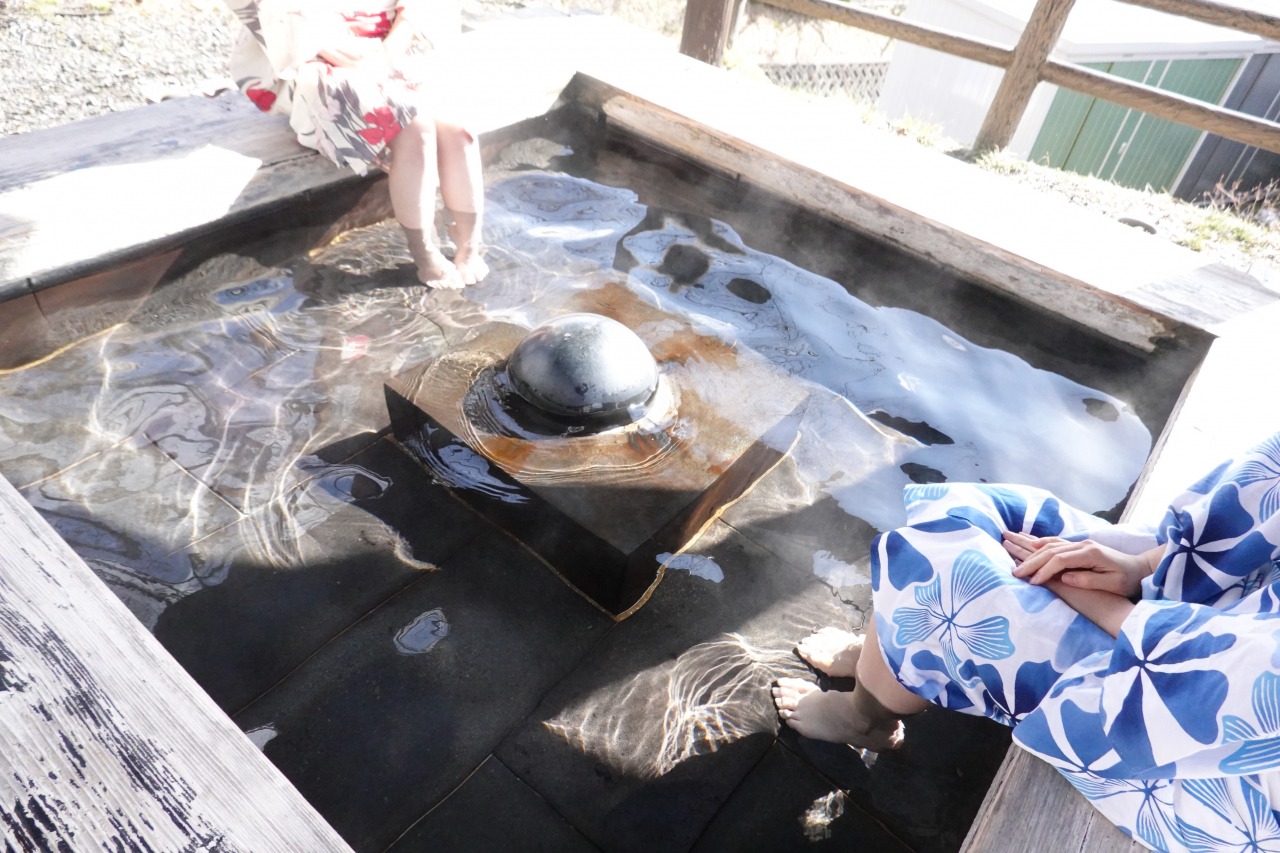
Zao Onsen is a highly acidic hot spring with a pH of around 1.3 to 1.5, boasting the second highest acidity in Japan, and is a “strongly acidic sulfur-aluminum sulfate chloride hot spring.” The milky white water is known as “beautiful skin water” and “beauty-making water,” and is excellent for treating skin diseases and sterilizing, and its vasodilatory properties can also help improve sensitivity to the cold.
★movie https://www.youtube.com/watch?v=IZI-jGnG85I
Zao Onsen, located in Yamagata City, Yamagata Prefecture, is one of Japan’s oldest hot springs, with a history dating back over 1,900 years. Characterized by the strongest acidic sulfur springs in the Tohoku region, it is popularly known as a “skin-beautifying hot spring” and a “beauty-making hot spring.”

山形県YamagataPrefecture 白布温泉 Sirabu Onsen
Contact:https://yamagatakanko.com/attractions/detail_2842.html
Shirabu Onsen in Yonezawa City, Yamagata Prefecture, is a sulfur-containing calcium sulfate spring (gypsum hydrogen sulfide spring) with a history of over 700 years. With a weak alkaline pH of 7.3 to 7.8, this sulfate spring is gentle on the skin and has a high heat retention effect, making it known as a skin-beautifying spring that is effective for cuts and chronic skin diseases.
★movie https://www.youtube.com/watch?v=FmEU5c5YY3U
Shirabu Onsen is a historic hot spring resort located at an altitude of approximately 850m on Mt. Nishiazuma, at the southernmost tip of Yonezawa City, Yamagata Prefecture. It has a history of approximately 700 years since its opening and is counted as one of the “Three Highest Hot Springs of Oshu.”
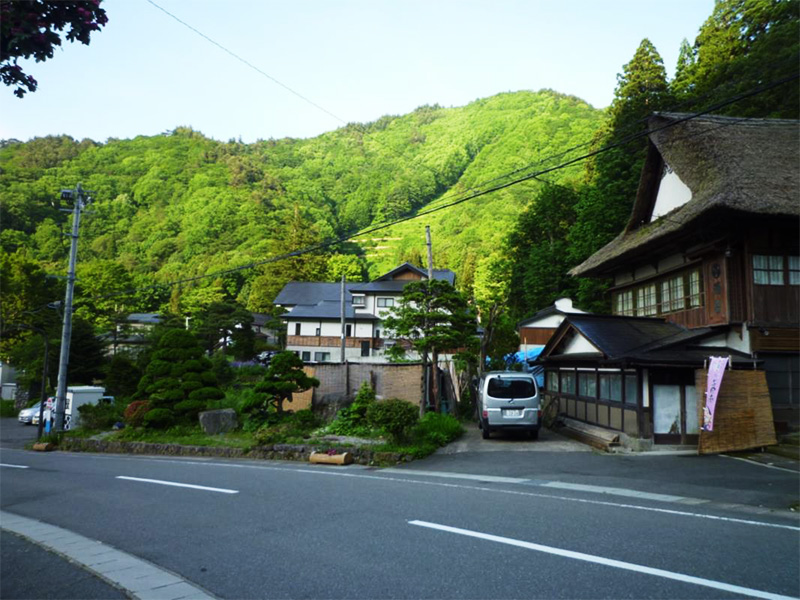
宮城県Miyagi Prefecture 作並温泉 Sakunami Onsen
Contact:https://www.spa.or.jp/search_p/detail_p/?F_ID=40010&pg=0
Sakunami Onsen in Miyagi Prefecture is a hot spring resort with a history of about 1,200 years, known as “Sendai’s inner sanctum.” The springs are mainly “simple hot springs” and “sodium-calcium sulfate-chloride springs,” which are gentle on the skin, and are characterized by their colorless, transparent, tasteless, and odorless, weakly alkaline, high temperature. They have a high moisturizing effect and are popular as “beauty-making hot springs.”
★movie https://youtu.be/Vb6To8gKXtQ?si=2cMEKTfNl9GRHw4n
Sakunami (saku-nami) onsen wa, miyagikensendaishi Aoba-ku ni ichi shi,`Sendai no oku zashiki’ to shite furuku kara shitashima rete iru onsen-chidesu. Hirosegawa no jōryū ni ichi shi, yutakana shizen ni kakomareta shizukana kankyō ga tokuchō de, Masaokashiki ya doi bansui nado no bunkabito ni mo aisa remashita.
Sakunami Onsen is located in Aoba Ward, Sendai City, Miyagi Prefecture, and is a hot spring resort that has long been loved as “Sendai’s inner sanctum.” Located upstream of the Hirose River, it is characterized by a quiet environment surrounded by abundant nature, and was loved by cultural figures such as Masaoka Shiki and Doi Bansui.

宮城県 Miyagi Prefecture 鳴子温泉 Naruko Onsen
Contact:https://www.naruko.gr.jp/
Naruko Onsen in Miyagi Prefecture is a hot spring paradise where eight of the 11 old classifications of spring quality found in Japan (simple springs, sulfur springs, baking soda springs, sulfate springs, etc.) are found. The main types of springs are sulfur-containing sodium bicarbonate, sulfate, and chloride springs, and the baking soda and sulfur springs are particularly famous for their skin-beautifying and moisturizing effects. Many facilities have their own hot spring sources, and you can enjoy a variety of water colors, including milky white, brownish-red, and greenish-white.
★movie https://youtu.be/NQX6qCPQMbY?si=AW7GBr_JZ6aCYqvc
Naruko Onsen in Miyagi Prefecture is a historic hot spring resort that is counted as one of the “Three Famous Hot Springs of Oshu,” along with Iizaka Onsen in Fukushima Prefecture and Akiu Onsen in Miyagi Prefecture. It is known as a “hot spring museum,” displaying nine of Japan’s eleven types of hot spring water, and boasts over 370 hot spring sources, the most in Honshu.

宮城県 Miyagi Prefecture 鎌先温泉 Kamasaki Onsen
Contact:https://shiroishi-navi.jp/detail/detail_3114/
Kamasaki Onsen in Miyagi Prefecture is known for its medicinal baths, known as “Kamasaki for wounds,” and its spring waters are primarily sodium chloride and sulfate springs. The waters are clear and colorless, with a slightly alkaline pH (pH 8.8) that is gentle on the skin. They are effective for cuts, burns, skin diseases, neuralgia, and sensitivity to cold, and have long been popular as a therapeutic hot spring.
★movie https://youtu.be/MDAr8LGbBms?si=4_u4hg2OoE8qiKHS
Kamasaki Onsen is a hot spring resort in Shiroishi City, Miyagi Prefecture, boasting a history of over 600 years. Since ancient times, it has been said that “Kamasaki is good for wounds,” and it has been popular as a medicinal hot spring in Oshu.

福島県 Fukushima Prefecture 高湯温泉 Takayu Onsen
Contact:http://www.takayuonsen.jp/
Takayu Onsen, located in Fukushima City, Fukushima Prefecture, is one of the “Three Takayu Hot Springs of Oshu” that have been around since the Edo period. It is a milky white acidic sulfur spring that naturally gushes out and boasts an abundant supply of high-quality water. With a pH of around 2.7, it has strong antibacterial properties and is known as a “beauty spring” that makes skin smooth. All facilities offer free-flowing hot spring water, making it a famous hot spring.
★movie https://www.youtube.com/watch?v=R7KeqfCkiO8
Takayu Onsen in Fukushima City is one of the “Three Takayu Hot Springs of Oshu” with a history of 400 years, and is an extremely popular hot spring resort that has even been ranked number one in the nationwide hot spring satisfaction rankings.
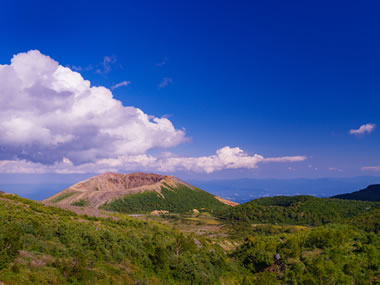
福島県 Fukushima Prefecture いわき湯本温泉 Iwakiyumoto Onsen
Contact:https://kankou-iwaki.or.jp/spot/10053
Yumoto Onsen, located in Iwaki City, Fukushima Prefecture, is one of Japan’s three oldest hot springs, with a history of over 1,600 years. The spring water is a sulfur-containing, sodium-chloride, sulfate hot spring (sulfur spring), with a high temperature of over 58°C. It is known as the “beauty hot spring,” “heat hot spring,” and “heart hot spring,” as it is effective for beautifying the skin, keeping the body warm, and treating arteriosclerosis.
★movie https://www.youtube.com/watch?v=prwcshr9dL0
Located in Iwaki City, Fukushima Prefecture, Iwaki Yumoto Onsen has a history of over 1,600 years and is a famous hot spring that is counted as one of the “Three Oldest Springs of Japan” along with Arima Onsen and Dogo Onsen. Formerly known as “Sano no Onsen,” it flourished as the only hot spring post town on the Hama-kaido road during the Edo period.
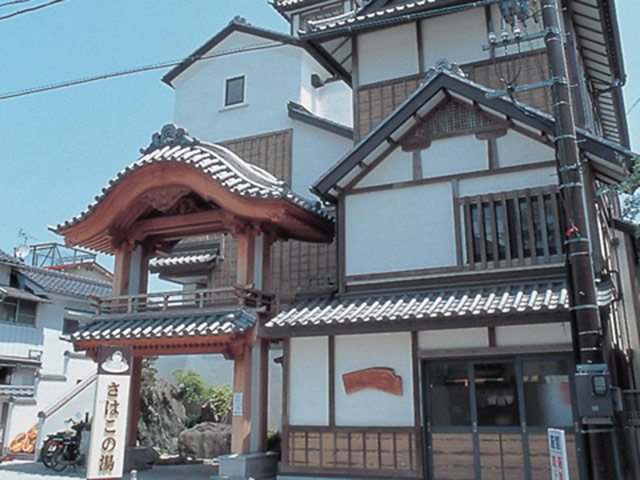
福島県 Fukushima Prefecture 岳温泉 Dake Onsen
Contact:https://www.dakeonsen.or.jp/
Dake Onsen in Nihonmatsu City, Fukushima Prefecture, is a rare hot spring resort nationwide with a pH of 2.5, a highly acidic spring with high sterilizing powers and the potential for skin-beautifying effects. The water is drawn from Mt. Adatara about 8km away and gently massaged, resulting in soft, acidic water that is gentle on the skin. It is primarily effective for chronic skin diseases, neuralgia, muscle pain, sensitivity to cold, and fatigue recovery.
★movie https://www.youtube.com/watch?v=hNG33ck56Ks
Dake Onsen in Nihonmatsu City, Fukushima Prefecture, is located at the foot of Mount Adatara and is a rare hot spring resort with acidic springs, even in Japan. The water is pumped from its source at an altitude of around 1,500m over a distance of about 8km over a period of 40 minutes, which massages the water and makes it soft against the skin.
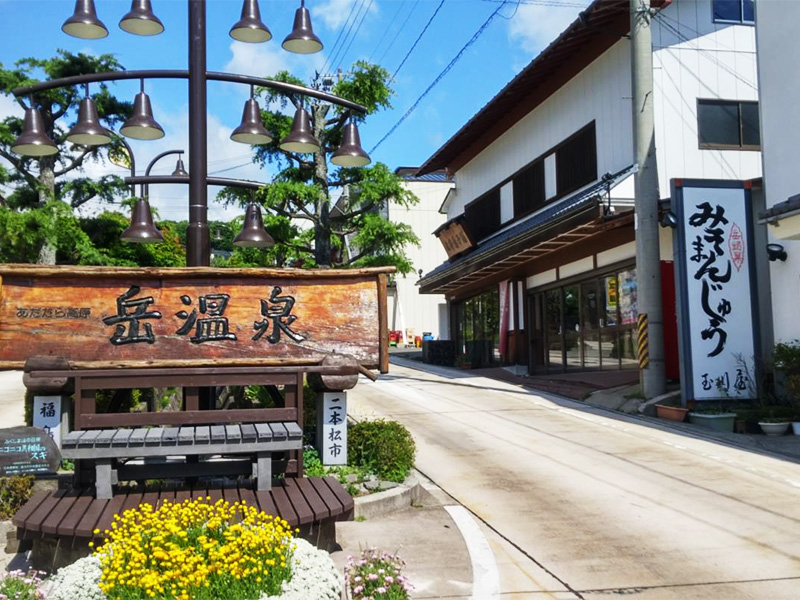
福島県 Fukushima Prefecture 甲子温泉 Kashi Onsen
Contact:https://www.tif.ne.jp/jp/entry/article.html?spot=4416
Koshi Onsen (Ryokan Daikokuya) in Saigo Village, Fukushima Prefecture, is a hidden hot spring with a history of about 600 years, characterized by calcium-sodium sulfate springs and simple hot springs. The water is slightly alkaline with a pH of around 7.6, and the free-flowing spring water is gentle on the skin and known to be effective for treating neuralgia, sensitivity to cold, chronic skin diseases, and fatigue.
★movie https://www.youtube.com/watch?v=nuCCk9il_3Y
Kashi Onsen in Saigo Village, Fukushima Prefecture, is a historic, hidden hot spring located along the source of the Abukuma River. It is known to have been loved by Matsudaira Sadanobu, the lord of Shirakawa Domain during the Edo period, and its symbol is the sole inn, Ryokan Daikokuya, which is a member of the Society for Preserving Japan’s Hidden Hot Springs.
福島県 Fukushima Prefecture 木賊温泉 Tokusa Onsen
Contact:https://www.kanko-aizu.com/higaeri/27819/
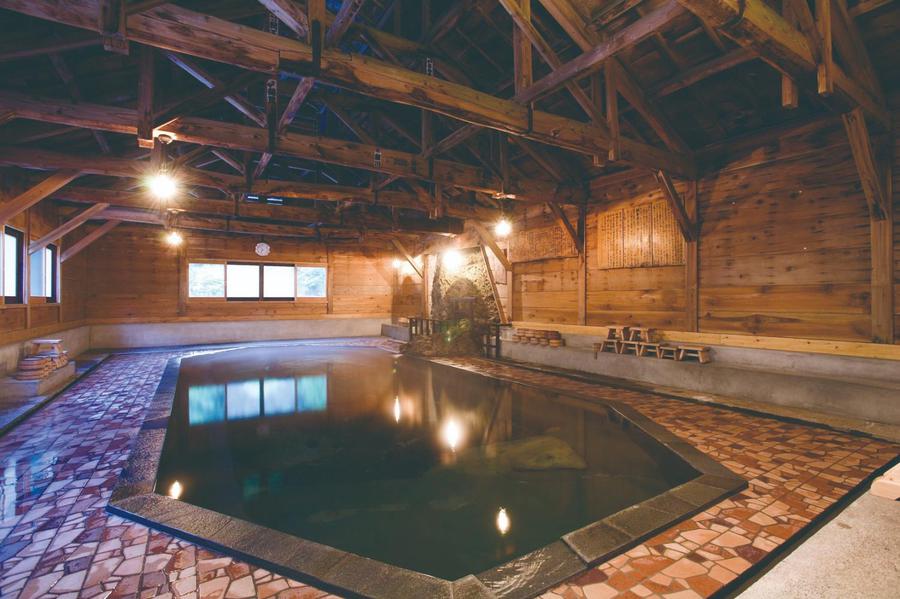
Tokusa Onsen in Minamiaizu Town, Fukushima Prefecture, is a “simple sulfur spring” or “simple alkaline hot spring” with a slight sulfur smell, and is characterized by its colorless, transparent water that flows directly from the source. This famous hot spring has a gentle, smooth feeling on the skin, and is said to be effective for neuralgia, muscle pain, skin diseases, sensitivity to cold, and fatigue recovery.
★movie https://www.youtube.com/watch?v=C2K8DPdc4mM
Tokusa Onsen, located in Minamiaizu Town, Fukushima Prefecture, is a secluded hot spring resort with a history of approximately 1,000 years, known as “Aizu’s hidden hot spring.” Located along the clear waters of the Nishine River, the resort is particularly famous for its rustic public bathhouse, the “Rock Bath,” built on the riverbank.

関東 Kanto
栃木県 Tochigi Prefecture 塩原温泉 Siobara Onsen
Contact:https://www.siobara.or.jp/
Tokusa Onsen in Minamiaizu Town, Fukushima Prefecture, is a “simple sulfur spring” or “simple alkaline hot spring” with a slight sulfur smell, and is characterized by its colorless, transparent water that flows directly from the source. This famous hot spring has a gentle, smooth feeling on the skin, and is said to be effective for neuralgia, muscle pain, skin diseases, sensitivity to cold, and fatigue recovery.
★movie https://www.youtube.com/watch?v=kB7fULnMZRg
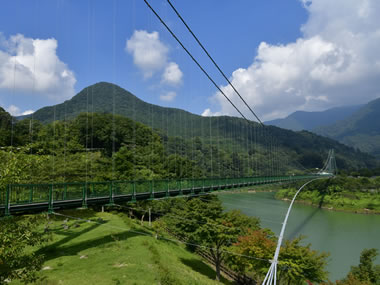
Shiobara Onsen in Nasushiobara City, Tochigi Prefecture, is a hot spring resort with 11 hot springs (the 11 Shiobara hot springs) that offer a rich variety of spring water, with six types (chloride springs, bicarbonate springs, sulfate springs, sulfur springs, acid springs, and simple hot springs). The hot springs are characterized by their “salt water,” which has excellent heat-retaining and moisturizing properties, and the cloudy waters (sulfur springs and acid springs) that have antibacterial properties, and are said to be effective for beautifying the skin and treating skin diseases.
栃木県 Tochigi Prefecture 奥那須温泉郷 Okunasu Onsenkyou
Contact:https://tabiiro.jp/onsen/article/nasu-onsen-yado/
Okunasu Onsenkyo in Nasu Town, Tochigi Prefecture, is made up of Daimaru Onsen, Kita Onsen, Yahata Onsen, and other hot springs, and is characterized by its “simple hot springs” and “simple sulfur springs.” With a variety of spring sources, from colorless, transparent, and gentle on the skin, to cloudy hydrogen sulfide sulfur springs, this famous hot spring is rich in nature and is said to be effective in relieving fatigue, alleviating sensitivity to cold, and improving skin condition.

★movie https://www.youtube.com/watch?v=fkUxxxC2-pI
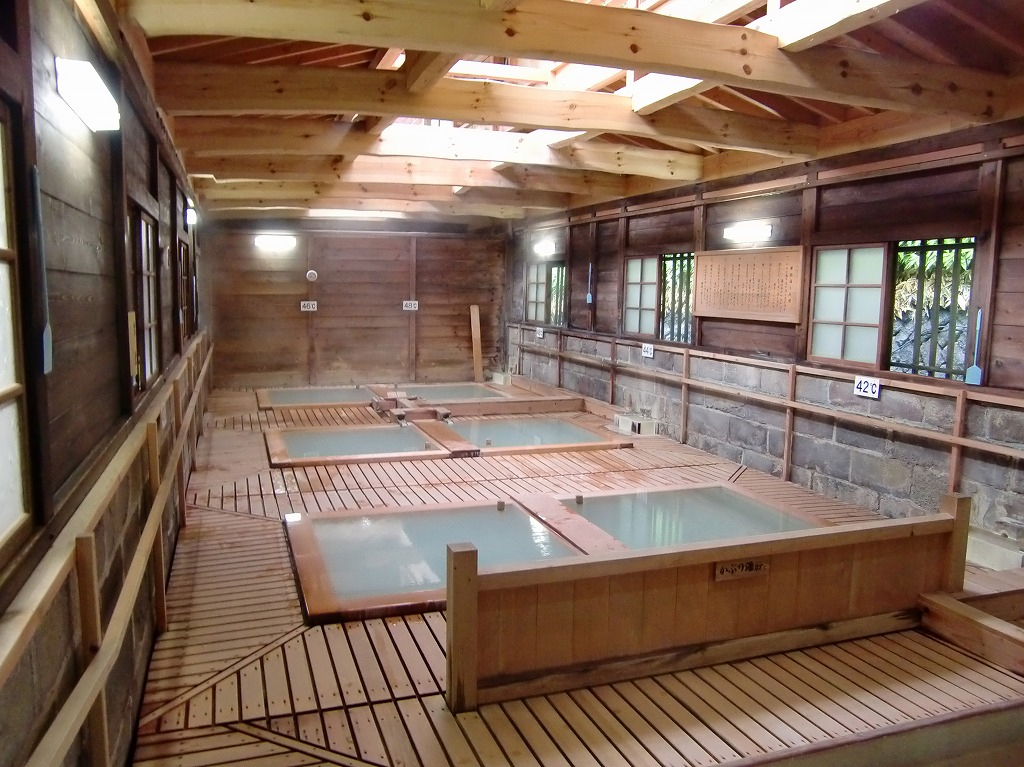
Located in the innermost part of the Nasu Onsen area, scattered across the slopes of Mount Chausu in northern Tochigi Prefecture, Daimaru Onsen is 1,300 meters above sea level and is famous for its rustic “Kawa no Yu” hot springs, where abundant natural hot spring water flows through the valley and the river itself becomes a hot spring. One of the seven hot springs in Nasu, including “Shika no Yu,” which was discovered in the 7th century, you can enjoy the atmosphere of a hidden hot spring and its high-quality milky white and cloudy waters.
栃木県 Tochigi Prefecture 板室温泉 Itamuro Onsen
Contact:https://www.tochigiji.or.jp/spot/s12716
Itamuro Onsen, located in Nasushiobara City, Miyagi Prefecture, is a hot spring resort that has long been known as “Shimotsuke’s medicinal bath.”
★movie https://www.youtube.com/watch?v=rmKMIG9F8Ls
Located in the mountains upstream of the Nakagawa River in Nasushiobara City, Tochigi Prefecture, Itamuro Onsen is a quiet hot spring resort with over 1,000 years of history, known as “Shimotsuke’s medicinal bath.” The warm alkaline simple hot spring warms the body to the core, and is loved by hot spring visitors as a “bath that doesn’t require a walking stick,” effective for relieving neuralgia, sensitivity to the cold, and fatigue.

栃木県 Tochigi Prefecture 湯西川温泉 Yunishikawa Onsen
Contact:https://www.pref.tochigi.lg.jp/c05/intro/tochigiken/hakken/shizen6_13.html
Yunishigawa Onsen in Nikko City, Tochigi Prefecture, is known for its “beauty-skin-boosting” hot springs, characterized by their strong alkaline simple hot spring water with a pH of over 9 (maximum pH 9.5). The water is colorless and transparent, smooth to the touch, and mild, making it a renowned hot spring suitable for the elderly and children. It is said to be effective for neuralgia, fatigue recovery, and sensitivity to the cold, and many inns offer free-flowing hot spring water.
★movie https://www.youtube.com/watch?v=Np1KKt8f9Nk
Tochigi ken Nikkō-shi no yunishikawaonsen wa, Dan’noura no gassen ni yabureta heike no ochiudo ga hakken shita to tsutawaru, rekishi aru keikoku-zoi no hitōdesu. PH 9 ijō no arukarisei tanjun onsen ga ōku, bihada no yu to shite mo shira rete imasu. 1 〜 3 Tsuki ni wa `kamakura-sai’ ga kaisai sa re, irori ryōri ya kawasakana nado shiki no sansai chinmi mo tanoshimemasu.
Yunishigawa Onsen in Nikko City, Tochigi Prefecture, is a hidden hot spring along a historic valley that is said to have been discovered by a Heike clan fugitive who lost the Battle of Dannoura. Many of the hot springs have alkaline simple hot springs with a pH of 9 or higher, and are known for their skin-beautifying properties. The Kamakura Festival is held from January to March, and you can enjoy hearth cooking, river fish, and seasonal wild vegetables and delicacies.
栃木県 Tochigi Prefecture 奥鬼怒温泉卿 Okukinu Onsenkyou
Contact:https://www.pref.tochigi.lg.jp/c05/intro/tochigiken/hakken/shizen6_02.html
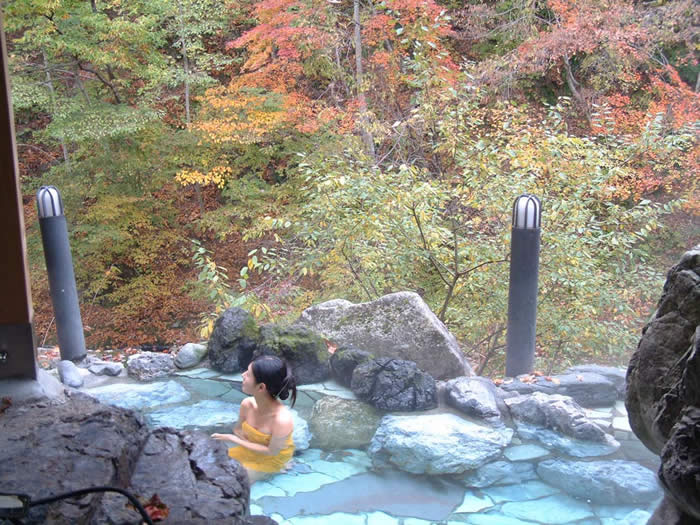
Okukinu Onsenkyo in Nikko City, Tochigi Prefecture, is the collective name for four hidden hot springs (Kaniyu, Hatchonoyu, Nikkozawa Onsen, and Tejirasawa Onsen) located at the source of the Kinugawa River. Each inn has its own hot spring source, and guests can enjoy a variety of spring qualities, from cloudy sulfur springs to clear, simple hot springs.
★movie https://www.youtube.com/watch?v=UadBOKM77DY
Okukinu Onsen, located in the deepest part of Nikko City, Tochigi Prefecture, is a hot spring resort known as “Kanto’s last unexplored region.” Located at an altitude of approximately 1,300m, it is surrounded by the lush primeval forests of Nikko National Park, and as general vehicles are prohibited from entering, it is a special place that can only be reached on foot or by a shuttle bus reserved for guests staying at the hotel.

群馬県 Gunma Prefecture 尻焼温泉 Shiriyaki Onsen
Contact:https://www.town.nakanojo.gunma.jp/soshiki/9/1214.html
Located in Nakanojo Town, Gunma Prefecture, Shiriyaki Onsen’s waters are primarily calcium-sodium sulfate-chloride springs.
This rare hot spring, whose source wells up from the bottom of a river, is said to have gotten its name from a time when people would sit on stones in the riverbed and cure hemorrhoids.
★movie https://www.youtube.com/watch?v=uFFUTngKURk
Shiriyaki Onsen in Nakanojo Town, Gunma Prefecture, is a rare hidden hot spring in Japan where hot spring water gushes out from the bottom of a river, turning the river itself into a giant open-air bath (kawa no yu). The name comes from the fact that people “burned (warmed) their buttocks” with the hot water that gushes out from the bottom of the river, and it has long been popular as a cure for hemorrhoids.
群馬県 Gunma Prefecture 草津温泉 Kusatu Onsen
Contact:https://www.town.kusatsu.gunma.jp/
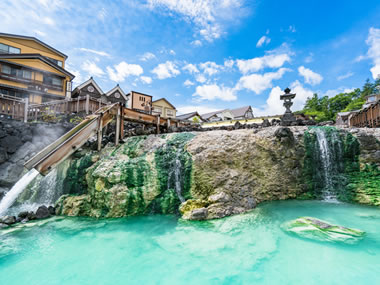
The waters of Kusatsu Onsen are primarily acidic, sulfur-containing, aluminum-sulfate, and chloride hot springs (strong acidity), boasting a pH value of 1.5 to 2.1, making it one of Japan’s most effective sterilizing springs. The waters are rich in metasilicic acid, making them a renowned hot spring that is said to be effective for beautifying the skin, treating chronic skin diseases, sensitivity to cold, and relieving fatigue.
★movie https://www.youtube.com/watch?v=V3c5qJV0ed0
Kusatsu Onsen, located in Kusatsu Town, Agatsu District, Gunma Prefecture, is one of Japan’s three most famous hot springs, boasting the largest natural hot spring water output in Japan at over 32,300 liters per minute. The highly acidic spring water has a strong sterilizing effect, making it a famous hot spring loved by many people. You can enjoy a hot spring massage show and a stroll around the hot spring town, centered around the iconic “Yubata.”
Kusatsu Onsen: Components and Effects
“Yumeguri” (hot spring hopping) is a travel style where you enjoy bathing in multiple inns and public baths (outdoor baths) within a single hot spring resort. You can enjoy different water qualities and scenery all at once, and many areas offer discounted bathing with a special “Yumeguri Pass.”
Surprisingly little known! Is “Yumeguri” prohibited in Kusatsu Onsen? Let’s unravel the mystery… Kusatsu Onsen is characterized by its extremely high acidity (around pH 2, e.g., Yubatake spring source pH 2.05) and bactericidal properties. The components are mainly acidic, sulfur-containing, aluminum-sulfate-chloride spring water, with strong efficacy for skin sterilization, exfoliation, neuralgia, chronic skin diseases, cold sensitivity, and fatigue recovery. The famous “Yumomi” (hot spring water stirring) bathing and the abundance of hot spring sources are major attractions.
Kusatsu Onsen: Components and Characteristics
Strongly acidic (around pH 2): Known as a “beauty spring” due to its high bactericidal power and ability to remove dirt and old dead skin cells.
Sulfur-containing, sulfate-chloride springs: Characterized by the sulfurous smell of the hot springs. Expected benefits include the “heat retention and moisturizing” effects of sulfate springs and the “sterilizing and blood circulation-promoting” effects of chloride springs.
Multiple spring sources: There are various spring sources, including Yubatake, Bandai-ko, and Jizo, each with slightly different water quality and stimulation.
Expected effects and indications:
Skin health: Atopic dermatitis, chronic eczema, psoriasis vulgaris, cuts, chronic skin diseases (sterilizing effect).
Chronic pain and fatigue recovery: Neuralgia, muscle pain, joint pain, frozen shoulder, fatigue recovery, poor circulation.
Other: Chronic digestive diseases, post-illness recovery, health promotion, diabetes, hypertension.
Bathing precautions:
Very irritating: People with sensitive skin should rinse off the hot spring components with a shower after bathing.
Hot spring side effects: Many springs have high temperatures, so avoid long baths and take breaks while bathing.
Furthermore, Kusatsu Onsen is characterized by its traditional bathing method called “Jikan-yu” (time bathing) and its abundant supply of free-flowing hot spring water, and has long been cherished as a therapeutic hot spring resort that enhances the body’s healing power.
The highly acidic (pH around 2.0) waters of Kusatsu Onsen are said to be effective in improving atopic dermatitis due to their excellent antibacterial and anti-inflammatory properties, and it is famous as a place for hot spring therapy (onsen-ji). While it is expected to have a bactericidal effect against Staphylococcus aureus and improve immunity, it is highly irritating, so care should be taken to avoid skin irritation, dryness, and worsening of symptoms, and moisturizing should always be done after bathing.
Key points regarding Kusatsu Onsen and atopic dermatitis:
Effects: The highly acidic spring water kills Staphylococcus aureus and other bacteria, suppressing chronic skin inflammation. Studies have reported that approximately 70-80% of atopic dermatitis patients showed improvement in their skin symptoms.
Recommended spring source: “Jizo-no-yu” has high antibacterial power, while its milky white color and smooth texture make it suitable for patients with atopic dermatitis and steroid-induced skin conditions.
Caution: Because it is very irritating, there is a risk of worsening symptoms for those with sensitive skin or severe dryness.
Bathing Instructions: Avoid long baths and aim for short baths. After bathing, it is recommended to lightly rinse with a shower or apply a moisturizer to prevent the hot spring components from remaining on the skin.
Recommended Hot Spring Locations and Consultation
“Timed Bathing,” aimed at improving chronic symptoms, is currently only offered in limited locations. If your symptoms are severe, it is safest to consult a doctor beforehand.
群馬県 Gunma Prefecture 沢渡温泉 Sawawatari Onsen
Contact:http://spa-sawatari.jp/
A scenic hot spring resort at an altitude of 600m. It has a long history as a therapeutic hot spring destination, and because it was a vital route leading to Kusatsu Onsen via the Kuresaka Pass, it became known as the “finishing bath of Kusatsu.”
It is a popular hot spring known as the “one-bath-beautifying spring,” where bathing leaves your skin as smooth and radiant as jade.
★movie https://youtu.be/7EeHPeHnOAY?si=VeL1TCsQ1_2xzOOE
Sawatari Onsen, located at an altitude in Gunma Prefecture, is a colorless, transparent calcium-sodium sulfate-chloride hot spring, known for its mildly alkaline, soft texture and as a “beauty spring.” It has long been known as a “finishing bath” to soothe skin irritated by the strong acidity of Kusatsu Onsen, and is a renowned hot spring praised for giving you “skin as smooth as jade.” It is a scenic hot spring resort with a long history as a therapeutic bathing spot. Because it was a vital route leading to Kusatsu Onsen over the Kuresaka Pass, it became known as the “finishing bath for Kusatsu.”
A hot spring beloved as a “beauty spring” that leaves your skin as smooth as jade after a bath.

群馬県 Gunma Prefecture 川中温泉 kawanaka Onsen
Contact: https://www.spa.or.jp/search_p/detail_p/?F_ID=100690&pg=0
Kawanaka Onsen in Gunma Prefecture is a quiet, secluded hot spring resort located along the Karigazawa River near the Agatsuma Gorge, with only one inn, “Kadohan Ryokan.” It is counted among Japan’s three most beautiful hot springs, and its approximately 35°C free-flowing calcium-sulfate spring water has a smooth feel and is said to be effective for atopic dermatitis and poor circulation. A mixed-gender open-air bath is also available.
★movie:https://youtu.be/kAdM51HraC0?si=-9KI3ItknFZ3YJJ4
Kawanaka Onsen in Gunma Prefecture is an alkaline calcium sulfate spring (formerly known as a gypsum spring) with a pH of 8.6-8.7, and is considered one of Japan’s three most beautiful hot springs. Its lukewarm water, around 35°C, is characterized by its cleansing effect, which washes away sebum and leaves skin smooth, as well as its high moisturizing and heat-retaining properties.

群馬県 Gunma Prefecture 万座温泉 Mannza Onsen
Contact:https://www.manzaonsen.gr.jp/
Located 1,800 meters above sea level in Gunma Prefecture, Manza Onsen is known as “the hot spring closest to the stars,” boasting one of Japan’s highest concentrations of sulfur (milky white) waters. With a daily output of approximately 5.4 million liters, it offers over 20 different types of spring water, effective for treating back pain and skin diseases. It can be enjoyed year-round with its spectacular open-air baths, skiing, and as a summer resort.
★movie:https://youtu.be/KU8iT9a0xWc?si=jFesCGhI6CPkPkfq
Manza Onsen in Gunma Prefecture is one of Japan’s leading high-concentration “acidic sulfur springs (hydrogen sulfide type)” located at an altitude of 1,800m. Characterized by its milky white, cloudy water, it is a famous hot spring with very strong antibacterial properties and is expected to have high efficacy against neuralgia and chronic skin diseases. It is a naturally flowing spring boasting an abundant water volume of 5.4 million liters per day.
群馬県 Gunma Prefecture 湯宿温泉 Ujyuku Onsen
Contact:https://gunma-kanko.jp/spots/758
Gunma ken Minakamimachi ni aru yujuku onsen (yuji ~yukuonsen) wa, Hiraki yu yaku 1200-nen no rekishi o motsu, mikunikaidō-zoi no shizukana onsen-chidesu. Ishidatami no retorona machinami ni 4tsu no kyōdō yokujō (take matsu kodaki kubo) ga tenzai shi, nosutarujikkuna fun’iki no naka de sotoyu-meguri ya ryōshitsuna ten’nen onsen o tanoshimeru, kakureta meitō supottodesu.
Yujuku Onsen, located in Minakami Town, Gunma Prefecture, is a quiet hot spring resort along the Mikuni Kaido road with a history of approximately 1200 years since its opening. With its retro cobblestone streets and four public bathhouses (Take, Matsu, Kotaki, and Kubo) scattered throughout, it is a hidden gem of a hot spring spot where you can enjoy visiting the public baths and soaking up high-quality natural hot springs in a nostalgic atmosphere.
★movie:https://youtu.be/z6_RU68uZV4?si=fbnW_GEEmtqFG1jI
Yujuku Onsen in Minakami Town, Gunma Prefecture, is a naturally flowing hot spring resort with a 1200-year history. The spring water is a sodium-calcium sulfate-chloride spring, also known as a Glauber’s salt spring. It is colorless and transparent, and is known as a “beauty spring” due to its high heat retention and moisturizing effects.

群馬県 Gunma Prefecture 猿ヶ京温泉 Sarugakyou Onsen
Contact:https://sarugakyo-navi.jp/
Sarugakyo Onsen, located in Minakami Town, Gunma Prefecture, is a quiet hot spring resort surrounded by nature and overlooking Lake Akaya. It is characterized by its calcium-sodium sulfate-chloride hot spring (known as the “beauty spring”), which is said to have high skin-beautifying effects, and is also known as a place associated with Uesugi Kenshin. Abundant hot spring water gushes forth, and there are plenty of hot spring inns and day-trip facilities where you can enjoy bathing and tofu kaiseki cuisine while taking in the lakeside scenery.
★movie:https://youtu.be/1L1TTRuwIxk?si=15JWyIos-MDcEZdk
Sarugakyo Onsen in Gunma Prefecture is primarily a “calcium-sodium sulfate-chloride hot spring (formerly known as a sodium chloride-gypsum spring),” a weakly alkaline, hypotonic, high-temperature hot spring. The colorless, transparent, and smooth water is also known as the “hot spring of longevity,” and is popular as a “beauty spring” with high moisturizing effects that leave the skin feeling soft and smooth.

群馬県 Gunma Prefecture 伊香保温泉 Ikaho Onsen
Contact:https://www.ikaho-kankou.com/
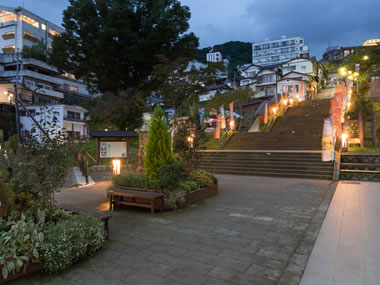
Located in Shibukawa City, Gunma Prefecture, Ikaho Onsen is a renowned hot spring resort with a history of approximately 400 years. The charming hot spring town is centered around a 365-step stone staircase. It boasts two types of spring water: the reddish-brown “Golden Spring” and the colorless and transparent “Silver Spring.” Visitors can enjoy strolling along the stone staircase, eating hot spring steamed buns and Mizusawa udon noodles, and admiring the changing autumn foliage throughout the seasons.
★movie:https://youtu.be/oNE62pL_Ubw?si=i_8yZZgtOXEUEe6X
Ikaho Onsen in Gunma Prefecture is characterized by its two types of hot springs: the reddish-brown “Golden Spring” and the clear “Silver Spring.” The Golden Spring is a sulfate spring effective for poor circulation and injuries, while the Silver Spring is a metasilicic acid spring effective for relieving fatigue and improving skin, and has long been cherished as a “hot spring for fertility.” (Shibukawa City tourist information)
神奈川県 Kanagawa Prefecture 小涌谷温泉 Kowakidani Onsen
Contact:https://www.jalan.net/onsen/OSN_50140/info/
Kowakudani Onsen is not located in Gunma Prefecture, but in Hakone Town, Kanagawa Prefecture (Hakone Onsenkyo), and is one of the “Hakone Seventeen Hot Springs” that have existed since the Edo period. Situated on the slopes of Mount Hakone, it is a hot spring resort rich in the beauty of nature throughout the seasons, with an abundance of alkaline simple hot spring water.
★movie:https://youtu.be/agwwpvZl61o?si=h15hYxfvADGxBv9o
Kowakudani Onsen in the Hakone Onsenkyo area of Kanagawa Prefecture offers a wide variety of hot springs, mainly alkaline simple springs and chloride springs, ranging from refreshing, skin-friendly baths to highly moisturizing ones. The springs are abundant, with high temperatures ranging from approximately 40°C to 96°C, and are said to be effective for treating rheumatism, neuralgia, and fatigue.
神奈川県 Kanagawa Prefecture 小涌谷温泉 Kowakidani Onsen
Contact:https://www.hakone.or.jp/6904
Kowakudani Onsen, located in Hakone Town, Kanagawa Prefecture, is a popular hot spring resort and one of the seventeen famous hot springs of Hakone. Situated at the foot of Mt. Horai, at an altitude of approximately 500 meters, it offers abundant nature and seasonal scenery (especially azaleas and mountain cherry blossoms).
★movie:https://youtu.be/iiyqBPiKGJY?si=5Cnicyp7M1E1z7fs
Kowakudani Onsen is one of the seventeen hot springs of Hakone, located in Hakone Town, Kanagawa Prefecture. The spring water is mainly alkaline simple hot spring water and chloride spring water, with a source temperature of 40-96°C, and is characterized by its gentle and refreshing water quality that is kind to the skin. It is also known as a hot spring for beautiful skin, and can be enjoyed at facilities such as Hakone Kowakuen Yunessun.
甲信越 Koshinetsu
新潟県 Niigata Prefecture 栃尾又温泉 Tochiomata Onsen
Contact:https://niigata-kankou.or.jp/spot/11612
Tochiomata Onsen, located in Uonuma City, Niigata Prefecture, is a quiet hot spring resort with a history of approximately 1200 years, known as the “hot spring of fertility.” It is characterized by its “long baths,” where visitors soak for extended periods in the lukewarm radium spring water, which is close to body temperature at 35°C to 37°C, and is a famous hot spring said to be effective for all kinds of ailments. Three inns (Jizaikan, Hōgandō, and Kamikazekan) offer simple and relaxing stays.
★movie:https://youtu.be/g3QlTfxXCSY?si=IRCfRPSdTtBnV7JW
Tochiomata Onsen in Uonuma City, Niigata Prefecture, is a “simple radium spring (radioactive spring)” with a history of approximately 1200 years, and is known as a natural “fertility spring” rich in radon. By taking a “neutral temperature bath” in the lukewarm water of about 35-36 degrees Celsius for 1-2 hours, it is expected to have effects such as cell activation, pain relief, and stabilization of the autonomic nervous system.
新潟県 Niigata Prefecture 貝掛温泉 Kaikake Onsen
Contact:https://www.yukoyuko.net/onsen/2053
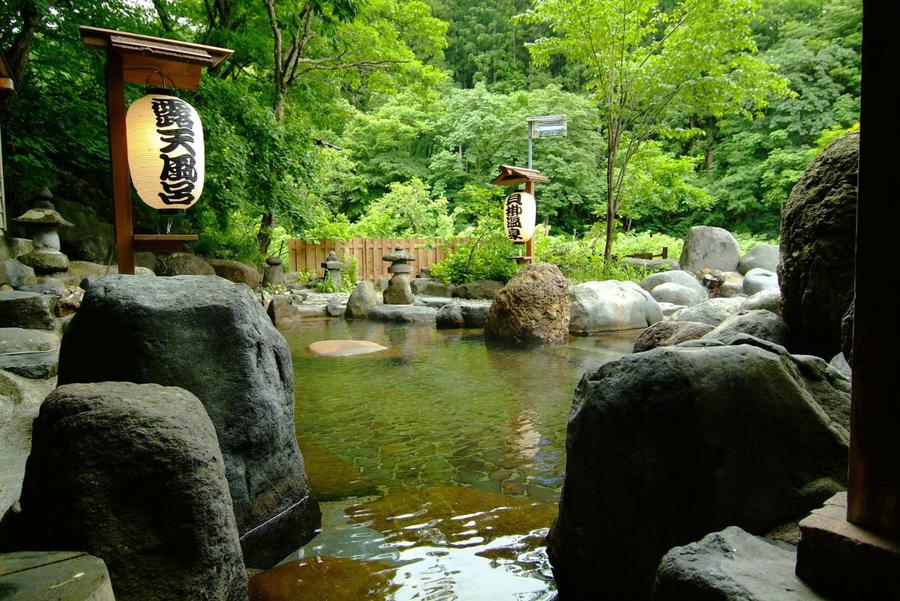
Located in Okuyuzawa, Yuzawa Town, Niigata Prefecture, “Kaigake Onsen” is a rare hot spring known nationwide as the “hot spring for the eyes,” boasting a 700-year history. The lukewarm water (chloride spring) at around 37°C is said to be effective for cataracts and dry eyes, and visitors can enjoy spectacular views of nature from the open-air bath with free-flowing hot spring water.
★movie:https://youtu.be/vo7-cj0Vi3o?si=FGk1Rn25AX2ooTrR
Kaikake Onsen in Okuyuzawa, Niigata Prefecture, is a renowned hot spring with a history of over 700 years, known as the “hot spring for the eyes.” The spring water is a sodium-calcium chloride spring, rich in metaboric acid, and is highly regarded for its lukewarm temperature (around 37°C) and free-flowing natural spring water.
新潟県 Niigata Prefecture 逆巻温泉 Gyakumaki Onsen
Contact:https://niigata-kankou.or.jp/spot/11685
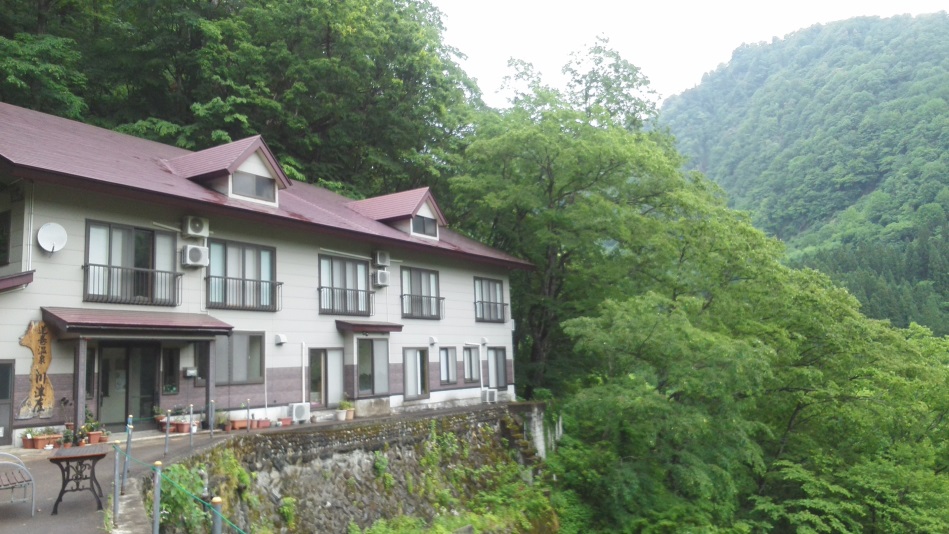
Located in Akiyama-go, Tsunan-machi, Niigata Prefecture, Sakasamaki Onsen Kawatsuya is a secluded hot spring inn beloved by the renowned author Eiji Yoshikawa. Its main attraction is the “Meisou no Yu” cave bath, carved out of a rocky mountain, and the radium-containing sulfur spring water, which has been flowing for approximately 200 years, is gentle on the skin. Guests can also enjoy seasonal cuisine featuring wild vegetables and char.
★movie:https://youtu.be/_I3sj_0HUYg?si=wWHtnjgVsaclS1HB
Sakasamaki Onsen in Tsunan Town (Akiyama-go), Niigata Prefecture, is primarily a “sodium-calcium chloride-sulfate spring,” known for its skin-beautifying and cold-relieving properties. (Kawatsuya, Ameba Blog, Rakuten Travel) The temperature is approximately [temperature not specified].
It is a high-temperature spring characterized by its naturally flowing, colorless, transparent, and smooth water quality.
長野県 Nagano Prefecture 上林温泉 Kamibayashi Onsen
Contact:https://www.kanbayashi-onsen.com/
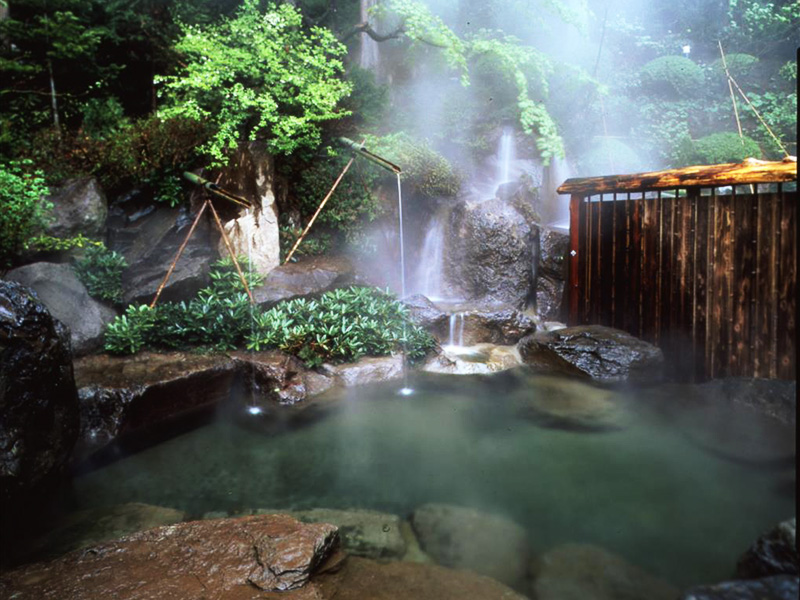
Kanbayashi Onsen in Yamanouchi Town, Nagano Prefecture, is a tranquil, secluded hot spring resort established during the Meiji era, located at the foot of the Shiga Kogen mountains. It features a free-flowing sulfate spring water drawn from the famous Jigokudani Onsen. In a retro atmosphere beloved by literary figures such as Natsume Soseki, you can use the renowned inn “Senjukaku” as a base to enjoy sightseeing at the Jigokudani Monkey Park, where you can see monkeys bathing in the hot springs.
★movie:https://youtu.be/iKawqDlvX58?si=kjYyaMur0gSRcCvG
Kanbayashi Onsen in Yamanouchi Town, Nagano Prefecture, is a hot spring resort primarily featuring sodium-calcium chloride-sulfate spring water drawn from Jigokudani (Hell Valley). The water is colorless and transparent, reaching a high temperature of around 59.5°C, and is said to be effective for neuralgia, muscle pain, poor circulation, chronic skin diseases, and fatigue recovery.
長野県 Nagano Prefecture 地獄谷温泉 Gigokudani Onsen
Contact:https://www.spa.or.jp/search_p/detail_p/?F_ID=203120&pg=62
Jigokudani Onsen in Nagano Prefecture is a hot spring resort adjacent to the Jigokudani Monkey Park, where you can see the world-famous “snow monkeys” bathing in the hot springs.
Main attractions:
Jigokudani Monkey Park: You can observe the rare sight of wild Japanese macaques bathing in the hot springs up close. Especially during the winter months from December to March, the monkeys are more likely to enter the baths to escape the cold.
★movie:https://youtu.be/2uCOJ_Fyo90?si=t510FEoY5_VFGgla
Jigokudani Onsen in Nagano Prefecture is a famous hot spring resort with high temperatures of 60°C to 80°C, featuring mainly sodium-calcium sulfate-chloride springs (formerly known as sodium chloride gypsum springs) or sulfur springs, and free-flowing natural spring water. In particular, Jigokudani Onsen Korakukan offers a sulfur-containing sodium-calcium chloride-sulfate spring (hydrogen sulfide type), which is said to be effective for treating cuts, poor circulation, and fatigue.
長野県 Nagano Prefecture 五色温泉 Goshiki Onsen
Contact:https://goshikinoyu.nagano.jp/
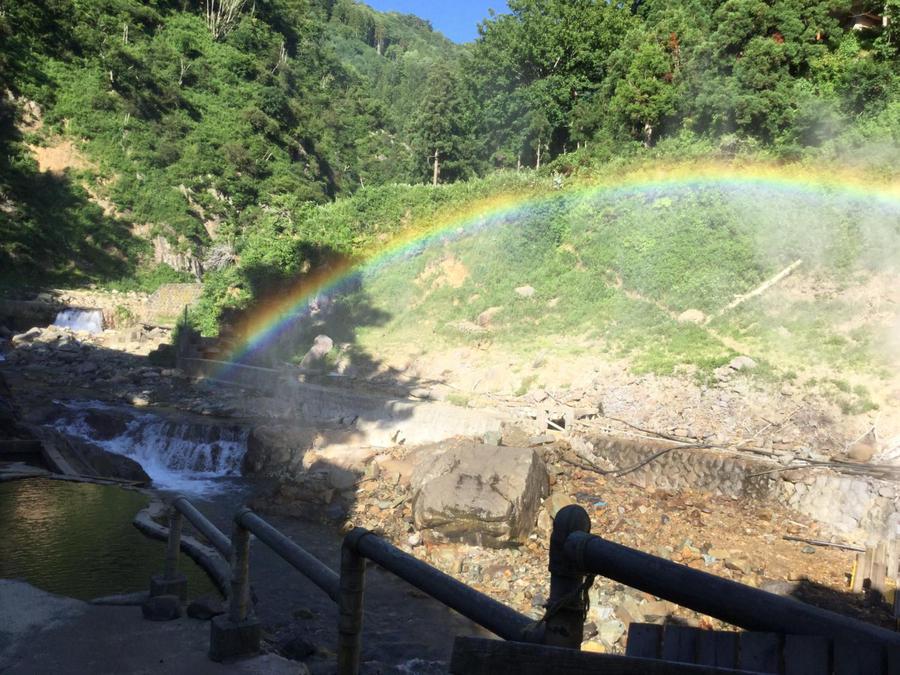
Goshiki-no-Yu Ryokan in Takayama Village, Nagano Prefecture, is a secluded inn nestled along the Matsukawa Valley. It features a sulfurous hot spring whose water color changes to five different shades depending on the weather, and a retro atmosphere illuminated by lamps. Guests can enjoy a spectacular open-air bath and cuisine made with seasonal local ingredients such as mountain vegetables and mushrooms, making it a popular hot spring destination for hot spring enthusiasts.
★movie:https://youtu.be/-QETs738vBw?si=RCygrvx5gZsA58Dc
Goshiki Onsen (Goshiki no Yu Ryokan) in Takayama Village, Nagano Prefecture, is a “sulfur-containing sodium-calcium sulfate-chloride hot spring” with a pH of 6.9, which changes color from milky white to cobalt blue to dark green. It is a neutral, high-temperature hot spring. The hot spring water flows directly from the source and is characterized by its sulfurous scent and soft, gentle water. It is a famous hot spring with efficacy for neuralgia, rheumatism, diabetes, and skin diseases.

長野県 Nagano Prefecture 野沢温泉 Nozawa Onsen
Contact:https://nozawakanko.jp/
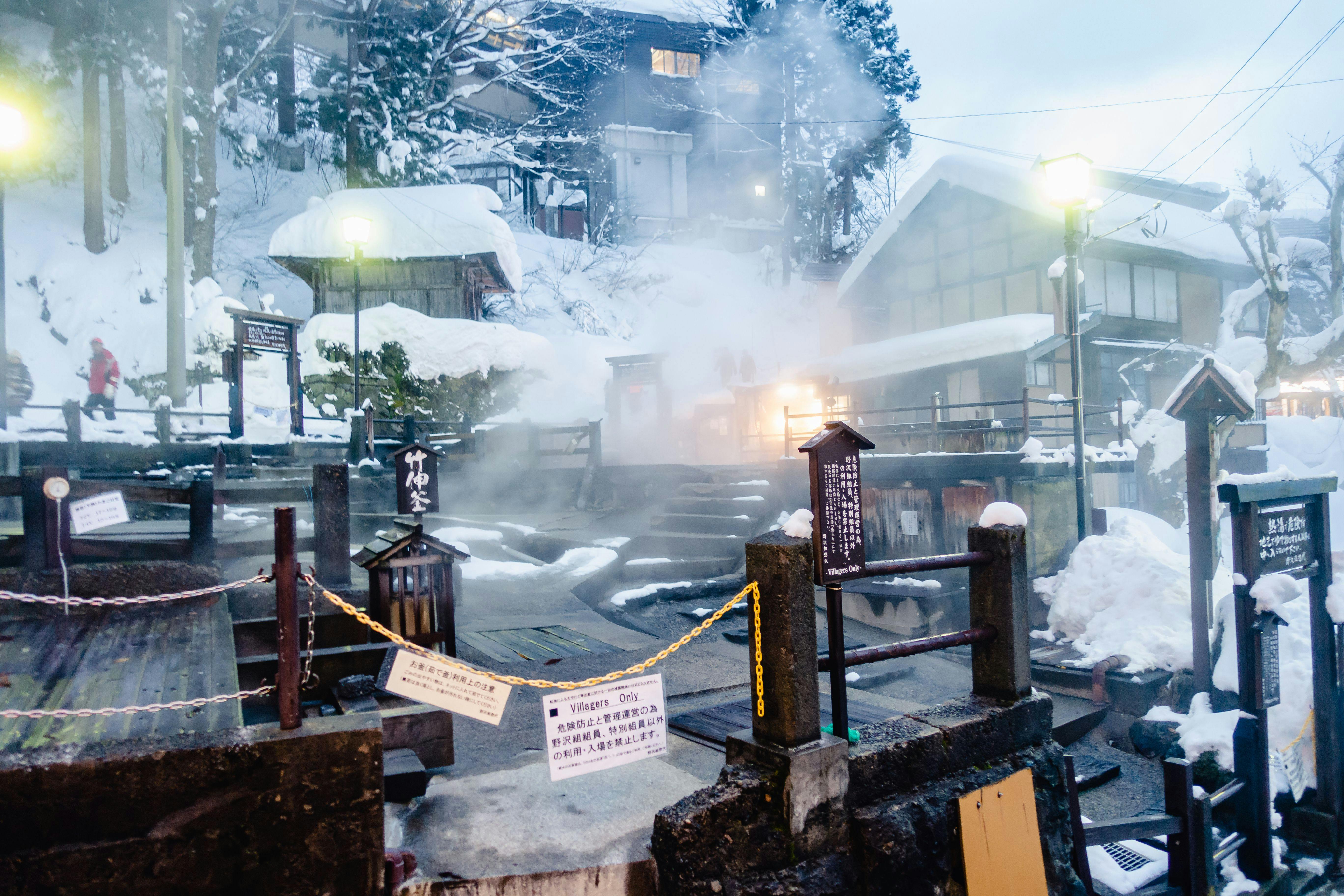
Located in northern Nagano Prefecture, Nozawa Onsen is famous for its 13 free public baths (known as the Yu-nakama system), high-quality sulfur springs, and a ski resort that has been operating since the Taisho era. It is also the birthplace of Nozawa greens, and the village retains the traditional atmosphere of an Edo-period hot spring resort and abundant nature, with attractions such as the nationally designated natural monument “Asagama” and the “Dosojin Festival,” one of Japan’s three major fire festivals.
★movie:https://youtu.be/-Cov94cUls0?si=_sbuZezp4V2hrQxx
Nozawa Onsen in Nagano Prefecture is primarily a sulfur spring (simple sulfur spring, gypsum-sodium chloride-sulfur spring), and the Asagama spring, in particular, is characterized by its high alkalinity (pH 8.5-8.8). Visitors can enjoy the scent of sulfur and the abundance of mineral deposits in the water. All 13 public baths (outdoor baths) use free-flowing spring water and are said to be effective for skin diseases, rheumatism, and gastrointestinal disorders.
長野県 Nagano Prefecture 鹿教湯温泉 Kakeyu Onsen
Contact:https://www.kakeyu.or.jp/
Located in the mountainous area of Ueda City, Nagano Prefecture, Kakeyu Onsen is a quiet and historic “National Health Resort” with a legend dating back approximately 1200 years to a deer healing its wounds there. The colorless and transparent waters of the weakly alkaline simple hot spring are known as a “famous hot spring” and are highly regarded for their effectiveness in treating neuralgia, joint pain, and other therapeutic conditions. The hot spring town also features the picturesque Godai Bridge and Monju-do Temple, making it a pleasant place for a stroll.
★movie:https://youtu.be/a9eYAHujfNY?si=9WZcNutQeX-_lp5g
Kakeyu Onsen in Nagano Prefecture is a weakly alkaline simple hot spring (hypotonic high-temperature spring) characterized by its colorless, transparent, odorless, and gentle water that is kind to the skin. The spring water, at around 46℃, gushes from five sources and is a famous hot spring that has been around since the Edo period, with excellent efficacy in treating neuralgia, joint pain, and fatigue.


コメント